

2026 Honda CR-V vs. Competitors
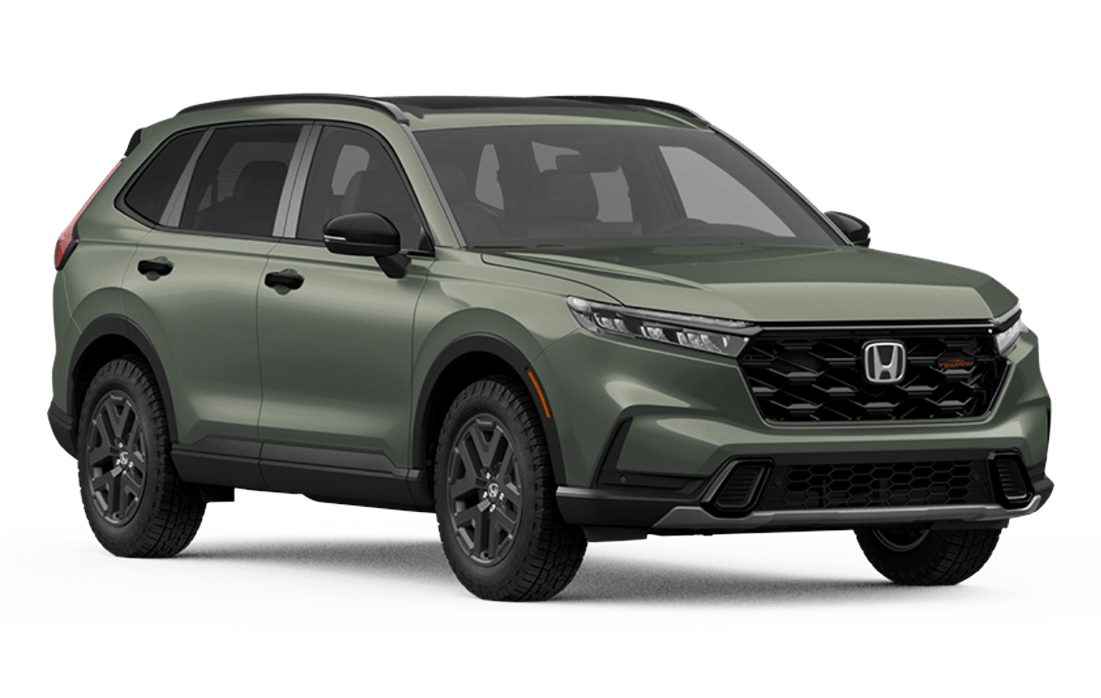
2026 Honda
CR-V vs. Competitors
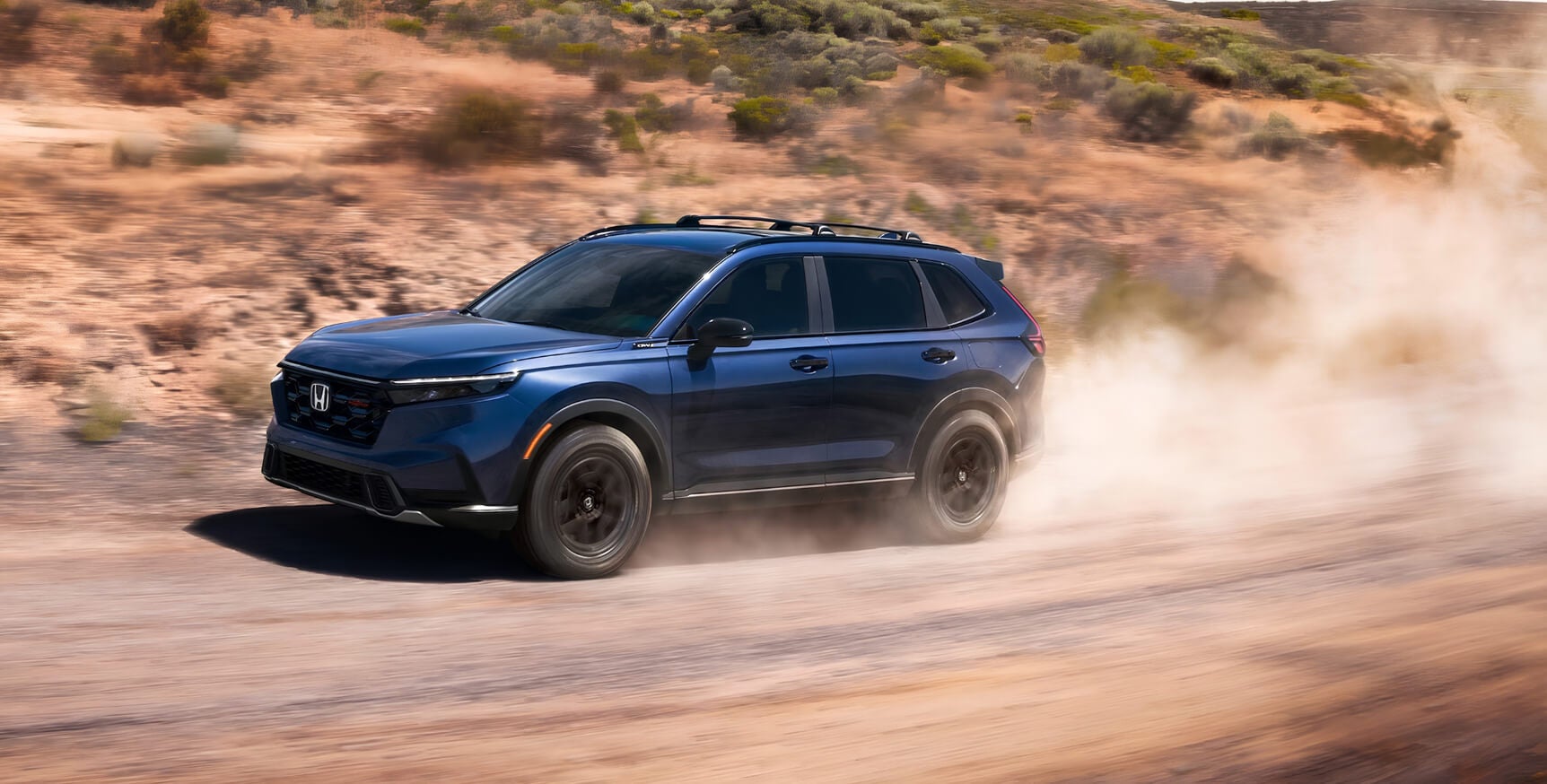
The Honda CR-V helped to define the compact crossover category when it debuted three decades ago. Not only that, but it has become one of the dominant sellers in that class, with consistently strong sales year after year. Today, Honda’s hottest model continues to set benchmarks in a crowded field. Let’s see what this means today as we compare the CR-V to the Chevrolet Equinox, Mazda CX-50, and Volkswagen Tiguan. Note that we use the least expensive all-wheel-drive trim for each model in this comparison.
Shop Honda CR-VPricing, Resale Value, and Ownership Costs
Among this group, the Tiguan is the most expensive, with a base MSRP of $32,305. The CR-V has a starting price of $32,240, while the Equinox starts at $30,800 and the CX-50 goes for $29,990. One area that buyers often overlook is resale value, which can make a big difference at trade-in time. This is where the CR-V truly stands out, as it holds an estimated 71% of its value after five years, according to CarEdge. The CX-50 follows at 63%. The Tiguan (52%) and Equinox (48%) lag behind, each retaining only about half of their original price over the same period.
A strong resale value also explains why the CR-V has the lowest five-year ownership costs, according to Edmunds. Based on 15,000 miles of annual driving, CR-V owners can expect the cost of having one to average $0.49 per mile. The CX-50's costs add to $0.53 per mile, or 8% more overall than the CR-V. The Tiguan ($0.58 per mile) and Equinox ($0.60 per mile) are considerably more expensive to keep on the road. At the same time, RepairPal projects that the CR-V has annual maintenance and repair costs of $407, compared to $537 for the Equinox. The Tiguan’s expenses in this area are $730. (RepairPal did not have data for the CX-50 at the time of this writing.)
Professional Reviews
In Edmunds testing, the CR-V received an overall rating of 7.5 out of 10, just behind the Tiguan's 7.6. The CX-50 scored 7.4, while the Equinox trailed with 5.7. Meanwhile, Kelley Blue Book (KBB) ranked the CR-V as the top compact crossover of 2026 among sixteen entries. The CX-50 earned fourth, as the Tiguan ranked seventh. KBB ranked the Equinox in eleventh place.
According to J.D. Power, the CR-V leads this group with an overall score of 83, including an 83 for quality and reliability (rated as “Great”). The Equinox follows with an overall score of 80 and a 76 for quality and reliability, placing it in the “Average” range. The CX-50 comes in slightly lower, earning a 77 overall rating and a 71 for quality and reliability, also considered average. The Tiguan was not rated.
Powerplants and Fuel Economy
All four of these vehicles rely on four-cylinder power, with the turbocharged 1.5-liter unit in the CR-V producing 190 horsepower. The Equinox has a similar setup, but its output only reaches 175 horsepower. Mazda takes a different approach with a naturally aspirated 2.5-liter engine that makes 187 horsepower. The Tiguan generates the most horsepower (201), but it's the least fuel-efficient model.
On that note, the EPA fuel economy ratings for the Tiguan are 22 mpg in the city and 30 mpg on the highway. The CR-V has the best fuel economy among the group at 27 mpg around town and 31 mpg on the open road. The Equinox (25 mpg city/29 mpg on the highway) and CX-50 (24 mpg city/30 mpg highway) sit closer to the middle.
Cabin and Cargo Space
In most critical measurements, the CR-V offers more passenger room than its rivals. For instance, this Honda has 41.3 inches of front legroom; more than the Equinox (40.9 inches) and Tiguan (40.2 inches). In addition, the CR-V's 41 inches of rear legroom outstretches the Tiguan (40.1 inches), Equinox (39.9 inches), and CX-50 (39.8 inches). The CR-V also has more front and rear shoulder room than the others.
More cargo space is another CR-V advantage, with 39.3 cubic feet behind the second row, compared to the Tiguan (33.8 cubic feet), CX-50 (31.4 cubic feet), and Equinox (29.8 cubic feet). Folding the rear seats down expands the CR-V’s capacity to 76.5 cubic feet, keeping it ahead of the competition’s range of 56.3 to 69.8 cubic feet.

May not represent actual vehicle. (Options, colors, trim and body style may vary)
*Any MPG listed is based on model year EPA mileage ratings. Use for comparison purposes only. Your actual mileage will vary, depending on how you drive and maintain your vehicle, driving conditions, battery pack age/condition (hybrid only) and other factors. For additional information about EPA ratings, visit http://www.fueleconomy.gov/feg/label/learn-more-PHEV-label.shtml .